
Homepage | Applications | Robotics
How embedded vision enables real-time perception and action for autonomous systems
Key Benefits of Embedded Vision in Robotics
High speed and low latency
through fast data transfer and onboard processing
Autonomy & security
autonomous operation with local data processing
Efficient design & easy integration
through fast data transfer and onboard processing
Robust, scalable & cost-efficient
Vision applications for robots: from industry to everyday life
Mobile Robots
Navigation and obstacle detection for AMRs and self-driving machines.
Humanoid Robots
Spatial perception and autonomous action, even in unfamiliar environments.
Industrial robots
Robots in industry handle complex manufacturing processes or work hand-in-hand with humans.
Medical Robots
Robots for use in medical applications assist.
VC Solutions for Embedded Vision in Robotics Systems
MIPI Camera Modules
Embedded Vision Systems
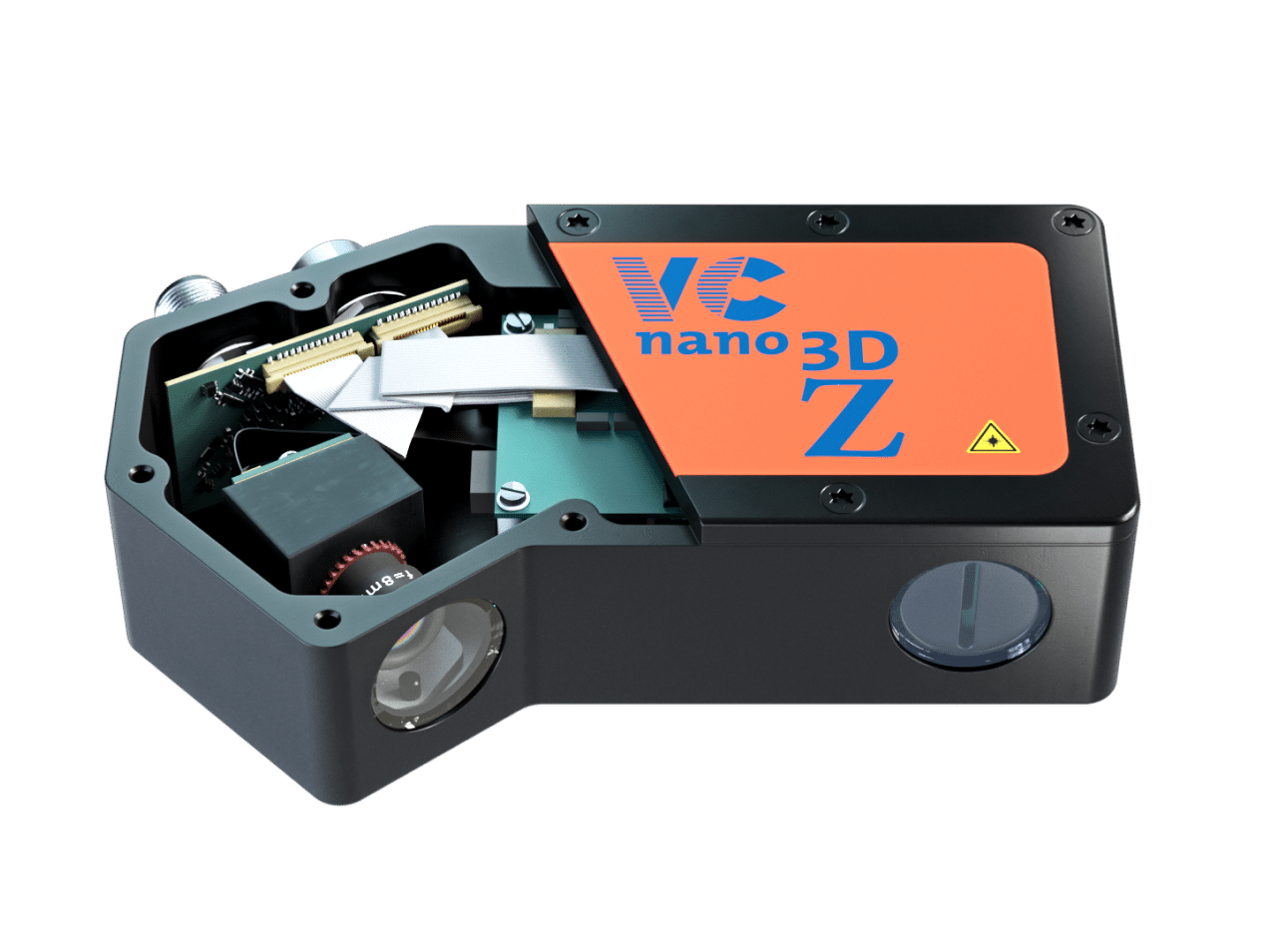
3D Camera Systems
The 3D camera systems for
triangulation applications are available for various working ranges from regular to XXL, and upon request, can be customized and provided both with and without housing.
How can we help integrate vision into your robotics project? Let’s talk about your goals and requirements.
- Selection of the right image sensor
- Integration: camera module, components, or complete system?
- Design-in, review, and series qualification
Vision Components: Your partner for Embedded Vision in robotics
- Made in Germany
- 30+ years of experience
- long-term available
- industrial-grade quality
- fully customizable
VC is a developer and manufacturer – not a distributor. Customers speak directly with experienced Embedded Vision experts and receive the components for their project from a single source. Individual adaptations and variants are possible at any time, perfectly matched to the respective application.
VC Case Studies: Vision Components at work
Cameras and systems from Vision Components have proven themselves in many projects. Here we present some examples – and show why our partners chose VC.
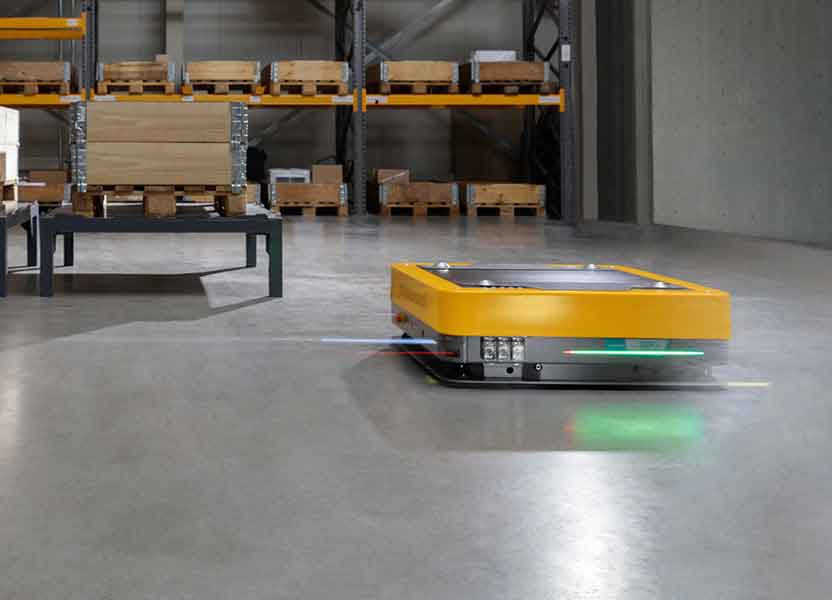
Precise navigation for arculus AMRs
Positioning autonomous mobile robots with millimetre precision – using VC MIPI cameras.
Guiding welding robots: the igm iCAM-PRO laser-cutting camera
Autonomous laser sensor based on a VC board camera
More Information on Embedded Vision applications for robotics
Do you have any questions?
What role does Embedded Vision play in modern robotics?
Embedded Vision is a key technology for robots: humanoid robots perceive their environment through cameras and can thus react to it in real time; Autonomous Mobile Robots navigate with millimeter precision via built-in cameras; robots for farming applications or service and cleaning robots independently find paths and objects. Modern robots are hardly conceivable anymore without embedded cameras or embedded vision systems like those from German manufacturer Vision Components.
Which camera technology is suitable for autonomous mobile robots (AMRs)?
Ultra-compact cameras such as the VC MIPI Camera Modules from Vision Components, which are available with numerous image sensors, are suitable for Autonomous Mobile Robots. They can be easily and flexibly integrated and connected to all common embedded processor boards, for example from NVIDIA or NXP. Important factors for the selection are high quality and robustness, first-class driver support, and long-term availability.
What is stereo vision and why is it important for robotics applications?
Stereo vision (or stereoscopic vision) is an image processing method that imitates human depth perception. In robotics, the ability to understand the environment three-dimensionally is the key to autonomy and safety. While a single camera (monocular vision) only provides flat 2D images, stereo vision gives robots a true spatial awareness.
For stereo vision recordings, two cameras are placed at a defined, horizontal distance from each other. They capture the same scene from slightly different angles. From the minimal differences between the two images—the so-called disparity—the system can precisely calculate the distance to objects in space.
What does Edge AI mean for robots and what hardware is required for it?
Edge AI is the ability to execute AI tasks such as object recognition, path planning, or speech processing directly on the device—in this case, a robot—without cloud access or external computing units. For this purpose, embedded vision systems such as the VC EvoCam from Vision Components, which enable onboard data processing with AI, are integrated into a robot as hardware. For humanoid robots and other high-performance applications, NVIDIA boards, for example, are used, to which VC MIPI Modules are connected as cameras. This is also referred to as Physical AI when the robots process data from numerous sensors in real time and react directly.
What requirements do humanoid robots place on cameras and image processing systems?
Humanoid robots require cameras and image processing systems that are as powerful, compact, and energy-efficient as possible. These factors are crucial for real-time data processing with AI and long-term mobile use. Furthermore, all components must meet the quality requirements for use in professional series products. The Vision Components cameras and embedded vision systems are therefore developed and produced in Germany. They are also available long-term, so that robots and other series products can be manufactured without time-consuming re-designs.
What is Physical AI and how does it relate to Embedded Vision?
Physical AI refers to systems that understand the laws of physics, perceive their environment, and can actively interact with it. Humanoid robots, cobots, and self-driving cars are examples of this. They use multimodal AI models to translate the data from numerous sensors into precise physical movements. Cameras and embedded vision systems for onboard data processing play a key role here because they offer a very high depth of data and analyzability. Vision Components is a manufacturer that develops and produces both MIPI cameras, which can be integrated as the "eyes" of the robot, and complete embedded vision systems, which can, for example, be integrated directly on the gripper arm of a robot to handle local tasks there.
Which camera solutions are suitable for medical robots and surgical robots?
Medical robots and surgical robots require ultra-compact camera sensors of the highest quality. Long-term availability also plays a central role here, so that the medical devices can be produced over the long term without re-design and re-certification after the complex development period and certification. Vision Components MIPI Cameras and embedded vision systems, which are specially developed and manufactured in Germany for these requirements in professional series products, are particularly suitable for this. They are available with numerous different image sensors.